
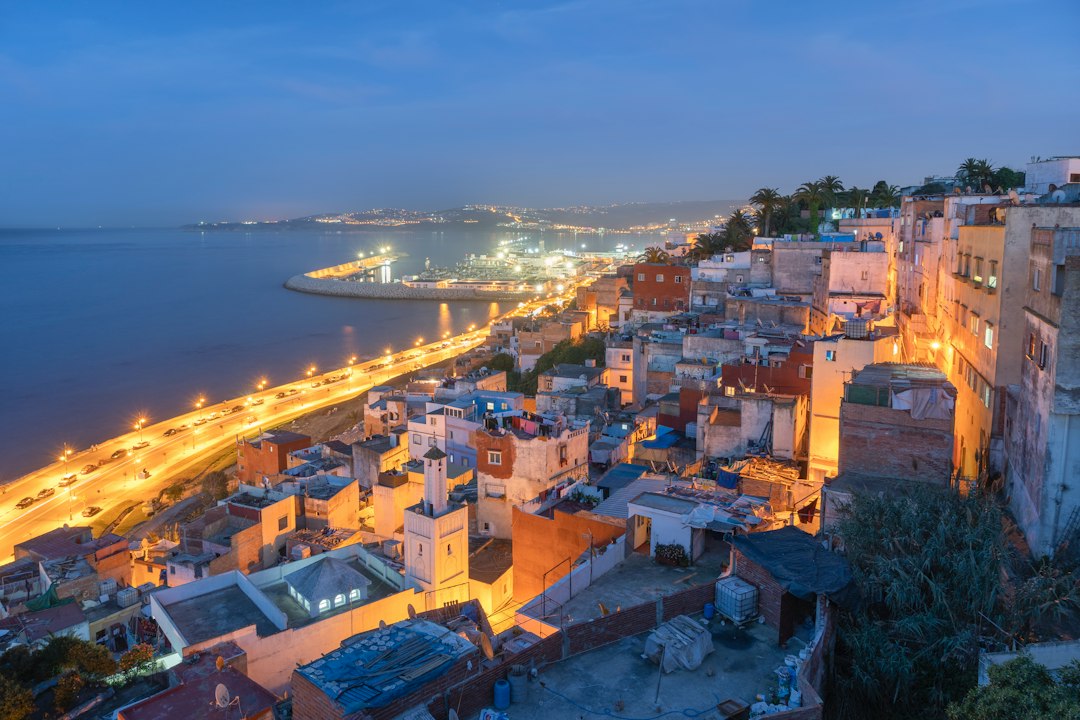
Yes, Tanja Balia is emerging as Tangier's next significant real estate hotspot. Driven by the relocation of Tangier's commercial port operations, urban renewal initiatives, and accelerating developer interest, this historic port district is transitioning from an industrial zone into a mixed-use residential and leisure destination. Property prices in Tanja Balia rose 8–15% in 2026 alone, reflecting growing international and domestic buyer confidence in the district's medium-to-long-term development trajectory.
What Is Tanja Balia and Why Is It Changing?
Tanja Balia sits alongside Tangier's historic Gare Maritime (port terminal) and the city's waterfront, a location that defined its character for over a century as the working heart of Tangier's maritime operations. For decades, the district remained primarily industrial—warehouses, shipping infrastructure, and customs facilities dominated the streetscape, making it a utilitarian rather than residential destination.
The catalyst for transformation has been the relocation of commercial port operations to Tanger Med Port, the deep-water facility located outside the city center on Tangier's southern coast. As cargo handling shifted away from the historic port, the waterfront space at Tanja Balia became available for urban renewal. The Moroccan government, as part of broader Vision 2030 investment in Tangier, has prioritized this district for residential and leisure development—a shift that is now attracting significant developer interest and international buyer attention.
Price Growth and Market Momentum in 2026
Data from 2026 shows that Tanja Balia is moving beyond theoretical potential into genuine market activity. Apartment prices in the district rose 8–15% over the year, positioning it among Tangier's fastest-appreciating neighborhoods. This growth rivals or exceeds that of more established districts, signaling that investors and homebuyers are beginning to recognize the district's value proposition.
The price growth reflects several converging factors:
- Urban renewal momentum: Infrastructure improvements, streetscape beautification, and pedestrian access projects are making the district more livable and attractive.
- Developer confidence: Major developers are launching projects in Tanja Balia, signaling their belief in long-term appreciation and rental demand.
- International buyer interest: Foreign investors and diaspora buyers are increasingly viewing Tanja Balia as an emerging-area play—lower entry prices with upside potential as the district matures.
- Port-proximity appeal: The historic maritime character and waterfront location offer unique lifestyle positioning unavailable elsewhere in Tangier.
Developer Activity and New Projects
Unlike many emerging neighborhoods that rely on speculative talk, Tanja Balia is seeing tangible developer deployment. Several of Immoworld's partner developers have announced projects in the district, ranging from mid-market apartment buildings to mixed-use developments combining residential, retail, and leisure facilities. This developer pipeline provides confidence that new supply will support sustained buyer interest.
The types of projects being built reflect the district's repositioning:
- Modern apartment complexes with sea views and waterfront promenades
- Boutique residential buildings targeting diaspora and international buyers
- Mixed-use developments combining apartments with ground-floor cafes, galleries, and leisure venues
- Renovation of historic port buildings into loft-style residences and creative spaces
This diversity of product types means that Tanja Balia can serve different buyer profiles—from investors seeking yield on compact studios to affluent buyers wanting character-filled waterfront residences.
How Tanja Balia Compares to Other Emerging Districts
Tangier has other emerging neighborhoods—Malabata, Malabata Hills, and Ghandouri all experienced significant growth in recent years. Tanja Balia differentiates itself through its uniqueness: it is the only emerging district with genuine waterfront character and maritime heritage. While Malabata offers pristine beach access and Ghandouri offers hillside luxury, Tanja Balia offers something harder to replicate—a lived-in, authentically urban waterfront with history.
This positioning also means lower prices than comparable waterfront alternatives. A 2-bedroom apartment in Tanja Balia typically costs 20–30% less than an equivalent unit in Marina Bay or established waterfront neighborhoods, while offering comparable—if not superior—development momentum and upside potential.
Rental Yield and Investment Appeal
For investment buyers, Tanja Balia's appeal extends beyond price appreciation. The district's emerging leisure character—waterfront cafes, galleries, and cultural spaces—is beginning to attract tourists and international visitors. This demand supports short-term rental yields of 5–7% annually, competitive with Tangier's best-performing neighborhoods.
Diaspora buyers, in particular, are viewing Tanja Balia as attractive for buy-to-let strategies. The combination of lower acquisition prices, rental demand from both tourism and local expat communities, and long-term appreciation potential creates a compelling investment thesis that explains much of the 2026 price growth.
Infrastructure and Connectivity
Tanja Balia's renaissance is not happening in isolation. The district benefits from broader infrastructure improvements across Tangier:
- Improved pedestrian and cycling connectivity linking Tanja Balia to the medina and city center
- Enhanced public transport with bus routes and planned light-rail integration
- Waterfront promenade development creating public space and amenity value
- Proximity to the TGV high-speed rail terminal currently under construction
These connectivity improvements reinforce Tanja Balia's position in the broader city ecosystem, making it less an isolated waterfront zone and more an integrated urban neighborhood with multiple access points and transport options.
Risks and Realistic Expectations
While Tanja Balia's trajectory is compelling, it's important to recognize that emerging neighborhoods carry more volatility than established areas. Tanja Balia remains a works-in-progress—the district still shows signs of its industrial past, streetscapes are incomplete in places, and full build-out will take several years. Buyers should expect continued construction activity, ongoing infrastructure work, and periods where the district feels rough around the edges.
Price growth of 8–15% annually, while robust, is not guaranteed to continue indefinitely. As the district matures and transitions from emerging to established, growth will likely moderate toward Tangier-wide averages of 6–10% annually. Buyers banking on 15%+ annual appreciation indefinitely may be disappointed.
Additionally, Tanja Balia's success depends on sustained developer activity and government commitment to urban renewal. If major projects stall or investor confidence wavers, growth momentum could slow. This makes it slightly riskier than established neighborhoods where the market has already validated pricing and long-term appeal.
What Buyers Should Know Before Investing
If you're considering Tanja Balia, several practical considerations matter:
- Timing matters: Early-stage buyers capturing the emerging-area discount will benefit most. As the district becomes more established, price appreciation will follow, but upside relative to entry price will compress.
- Location within the district: Not all Tanja Balia addresses are equal. Projects close to the waterfront promenade and cultural venues command premiums and rental demand. Older commercial properties farther from the water may appreciate more slowly.
- Developer reputation: The identity of the developer matters significantly in emerging districts. Look for projects from established developers with track records of completing projects on schedule and maintaining quality standards.
- Off-plan vs. resale: Most new Tanja Balia inventory is off-plan. Understand VEFA protections and developer guarantees before committing capital.
- Rental demand assessment: If you're buying to rent, visit the district at different times of day and week to assess actual tourist and expat foot traffic, not just developer renderings.
Is Tanja Balia the Right Choice for You?
Tanja Balia is the right choice if you're seeking:
- Emerging-area pricing with established infrastructure and connectivity
- Waterfront character at a discount to more established seaside neighborhoods
- A portfolio diversification strategy—adding an emerging district alongside established holdings
- Medium-to-long-term appreciation (5–10+ year hold) rather than quick flips
- Rental yield potential supported by tourism and expat communities
Tanja Balia may be less suitable if you're seeking:
- Immediate occupancy in a fully finished, calm, residential-only neighborhood
- A primary residence in a quiet, established area free from ongoing construction
- Guaranteed short-term price appreciation without market volatility
The Bottom Line
Tanja Balia is genuinely emerging as Tangier's next significant real estate hotspot, powered by actual infrastructure transformation, credible developer activity, and measurable price appreciation in 2026. Unlike many "emerging" neighborhoods that exist primarily in marketing materials, Tanja Balia has concrete momentum: government investment, completed projects, active buyer demand, and a unique market position as Tangier's waterfront urban neighborhood.
For investors with medium-to-long-term timelines and comfort with emerging-area volatility, Tanja Balia offers compelling value. For primary residence buyers seeking calm, established neighborhoods, other districts may feel safer. The district is no longer a speculative bet—it's a legitimate opportunity with demonstrated market backing.
If Tanja Balia interests you, don't delay. As the district matures and more international buyers discover it, the emerging-area discount that exists today will compress. The time to capture that pricing advantage is now, before the next wave of development and demand fully reshapes the neighborhood's perception and pricing.