
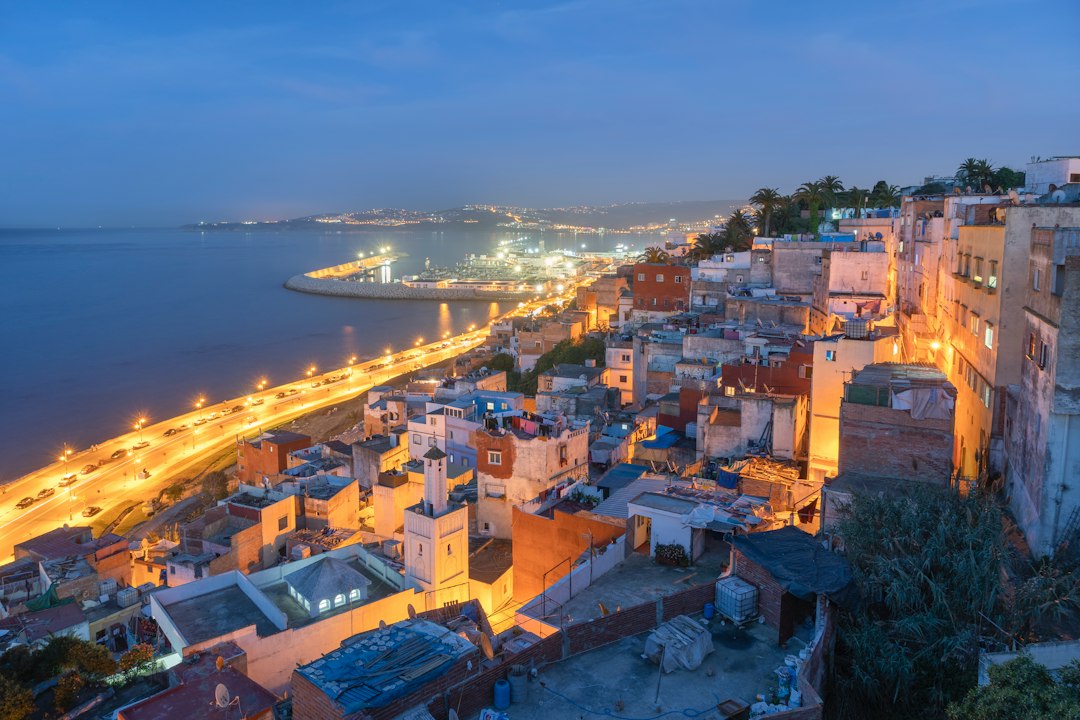
Tangier's infrastructure boom in 2026 is a primary driver of rising property values across the city. Major projects—including the TGV high-speed rail connection, Tanger Med port expansion, urban renewal corridors, and improved road networks—are creating genuine scarcity in well-positioned neighborhoods, pushing prices upward for both residential and commercial real estate. These investments position Tangier as Morocco's most dynamic growth market, attracting diaspora buyers, international investors, and expatriate workers seeking reliable appreciation combined with lifestyle quality.
The Infrastructure Timeline Reshaping Tangier's Market
Tangier's transformation is anchored in Morocco's Vision 2030 strategy, which explicitly targets the city as a global gateway. The projects underway are not speculative—they are funded, under construction, or in final planning stages, and they create measurable economic activity that directly affects property demand.
The TGV high-speed rail connection is the most visible catalyst. Scheduled for full operation in 2026, this link will connect Tangier to Casablanca and Fes, cutting travel time to Casablanca from 5.5 hours to just 2.5 hours. That shift transforms Tangier from a peripheral northern city into a regional hub—one where workers, investors, and tourists can operate seamlessly across northern Morocco's economic corridor.
Tanger Med's ongoing port expansion adds urgency to residential demand. Already Africa's largest container port by volume, Tanger Med is adding capacity and container yards, creating jobs for port workers, logistics managers, and service professionals who need housing within commuting distance. This workforce migration is a direct lever on neighborhood selection and price appreciation in Tangier's emerging east-side and port-adjacent areas.
Which Neighborhoods Are Seeing the Strongest Price Appreciation?
Infrastructure doesn't lift all neighborhoods equally. The greatest appreciation is happening in districts positioned along or near transport corridors—areas where commute time to infrastructure hubs becomes a genuine advantage.
TGV-Accessible Corridors: Central & East-Side Districts
Avenue Moulay Rachid, one of Tangier's established central corridors, has seen accelerated off-plan activity in 2026 as developers recognize that central apartments within walking distance of the train station command premium pricing. Similarly, Quartier Administratif and Tanger City Center are attracting mid-to-upper market apartment launches because they are literally minutes from the TGV station, making them attractive to business travelers and remote workers who value speed over beachfront lifestyle.
Tanger Med Adjacency: Port-Side & Eastern Neighborhoods
Tanja Balia, the emerging port district alongside Gare Maritime, is experiencing a complete urban renewal. The neighborhood was historically overlooked as a working-class port area, but with the port's expansion and the city's deliberate repositioning of this corridor as a leisure-and-residential destination, property prices have appreciated 20–35% in the past 18 months. Apartments that sold for 80,000€ in 2023 now list at 110,000€–130,000€ for comparable units.
Meghogha, on Tangier's eastern side, offers even stronger appreciation potential. Positioned between central Tangier and Tanger Med, with good road connectivity, Meghogha is attracting younger families and Tanger Med workers seeking affordability without sacrificing proximity to employment. This district's growth is quietly outpacing coastal neighborhoods because the economic driver is clear and proximate.
Waterfront Prestige: Boulevard Mohamed VI & Malabata
Boulevard Mohamed VI, Tangier's waterfront corridor, has always commanded premium pricing, but the arrival of high-capacity transport links has renewed demand for waterfront apartments among international buyers. The psychology has shifted: a waterfront apartment is no longer just a lifestyle choice—it's also well-positioned for business travel via the TGV or for airport access via improved road connections.
Malabata and the newly developing Malabata Hills are also seeing strong interest. These neighborhoods offer a blend of beachfront lifestyle with reasonable distance to the TGV station and Tanger Med, making them attractive to international families who want both Mediterranean living and practical connectivity.
Infrastructure-Driven Demand Categories in 2026
The infrastructure boom is reshaping who buys what. Understanding these buyer segments helps explain where price growth is most pronounced:
- Diaspora Professionals: Moroccan emigrants returning or investing are using the TGV to justify Tangier apartments—workable commutes to Casablanca business centers, plus Mediterranean lifestyle. These buyers typically target 2–3 bedroom apartments in central or west-side neighborhoods, with budgets of 150,000€–300,000€.
- Tanger Med Workers: International logistics professionals, port managers, and supply chain specialists relocating to Tangier for employment are renting or buying small-to-medium apartments in east-side neighborhoods. This group drives studio and 1-bedroom demand in neighborhoods like Meghogha and Tanja Balia.
- International Investors: European and Gulf buyers are purchasing off-plan apartments for short-term rental (Airbnb, vacation rental) with the understanding that infrastructure improvements and international visitor access will boost occupancy rates and nightly rates.
- Remote-Work Expats: Digital nomads and remote workers are using improved transport infrastructure to justify Tangier as a base—cheaper cost of living, lower property prices, strong rental yields, and now genuine connectivity to European business hubs via TGV and Tangier Airport.
The Developer Response: Off-Plan Acceleration in 2026
Major developers are reading this infrastructure roadmap and accelerating off-plan launches. Immoworld's developer partners, including companies like Aafer Groupe, Eagle Hills Morocco, and Amanah Real Estate, have all announced or launched new projects explicitly positioned around infrastructure access. This developer confidence translates into competitive pricing for early buyers—but only if you purchase in the off-plan window before final phases launch.
Off-plan pricing typically locks in 15–25% below completion-ready market prices in the same neighborhood. Given the rate of appreciation in infrastructure-linked neighborhoods, buying off-plan now (with delivery in 2026–2028) likely means you'll own at a price that's already discounted relative to where the market is moving.
Price Elasticity: How Much Are Infrastructure Projects Lifting Values?
The data from early 2026 shows measurable but varied appreciation:
- Central Corridors (TGV-Adjacent): 12–18% year-on-year appreciation for apartments within 1 km of the TGV station or major transport hubs.
- East-Side & Port-Adjacent: 18–28% appreciation in Tanja Balia, Meghogha, and emerging Tanger Med–linked neighborhoods.
- Waterfront Prestige: 8–15% appreciation for Boulevard Mohamed VI and Malabata (steady, but less explosive than emerging zones because these areas already carried premium pricing).
- Peripheral Hillside (Jbel Lkbir, Route Rahrah): 5–10% appreciation; these areas benefit from infrastructure indirectly (improved road links) but lack direct proximity to headline projects.
The takeaway: infrastructure creates price tiers. Central, port-adjacent, and TGV-accessible neighborhoods are appreciating faster than peripheral areas. If you're buying for price growth, location relative to infrastructure is the primary selection criterion in 2026.
Looking Forward: Infrastructure Completion & Market Maturation
By late 2026 and into 2027, several of these infrastructure projects will be operational or approaching completion. The TGV will be running daily. Tanger Med's expansion will be live. The psychological shift from "future investment" to "proven connectivity" will likely stabilize some of the speculative appreciation, but it will also anchor long-term price floors at higher levels.
This timing creates a window: 2026 is still the "infrastructure premium" phase, where buyers can capture appreciation tied to the perception and early-stage reality of these projects. By 2027–2028, once infrastructure is normalized, appreciation rates will likely moderate to single-digit annual growth, in line with broader Moroccan market trends.
What This Means for Your 2026 Purchase Decision
If you're buying in Tangier in 2026, infrastructure positioning should be your primary neighborhood filter. Ask yourself:
- How close is this property to the TGV station or planned transport links?
- Is this neighborhood positioned to benefit from Tanger Med employment or commercial activity?
- Are developers launching new projects in this zone, signaling market confidence?
- What's the realistic commute time to major employment centers (port, airport, central business district)?
These infrastructure-linked neighborhoods offer both appreciation potential and practical lifestyle advantages. And because Tangier's Tangier real estate market 2026 is still in a growth phase, early movers are capturing real value before the market fully prices in the infrastructure improvements.
Ready to explore Tangier's infrastructure-linked neighborhoods? Browse available properties filtered by location, or contact our advisory team to discuss neighborhoods that match your budget and timeline. We can help you understand which areas are positioned for the strongest appreciation as these projects come online.