
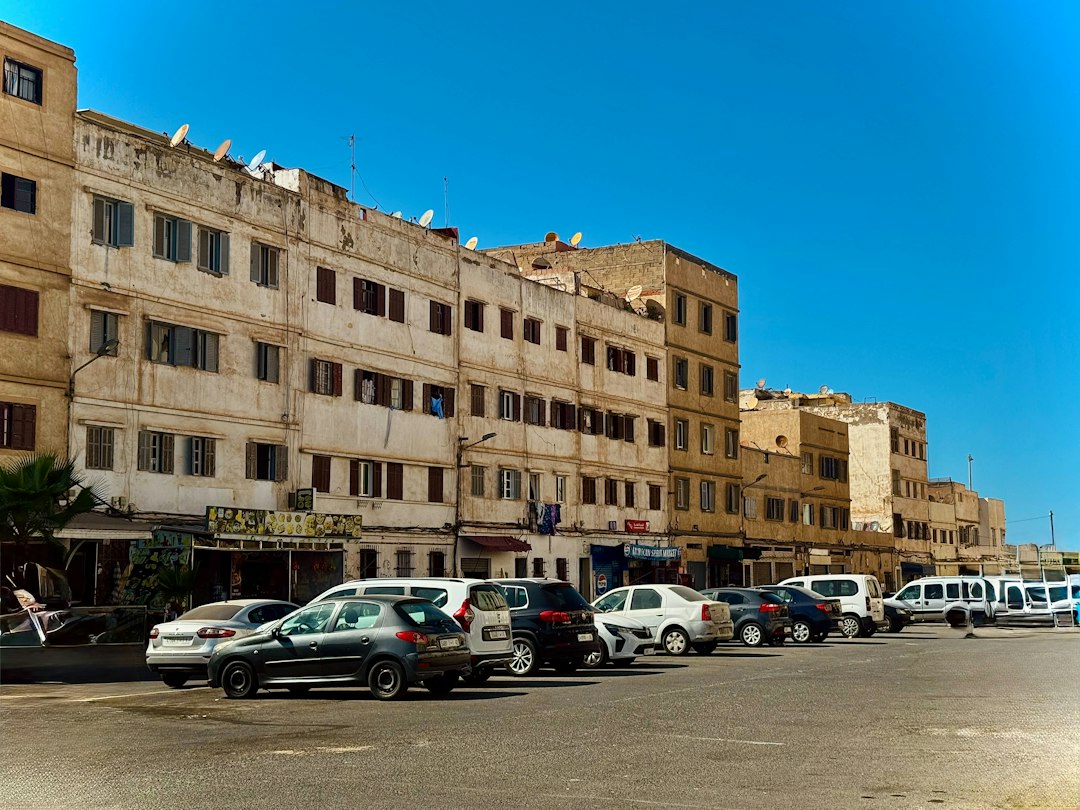
Tanger City Center experienced remarkable price growth in 2026, with apartment values rising 11–17% year-over-year. This acceleration reflects the district's evolution into Tangier's primary business and hospitality hub, anchored by the Socco Alto complex—which houses two Hilton hotels, office space, and retail frontage. Infrastructure investment, increased corporate demand, and rising international interest in Tangier's business segment have fundamentally reshaped property values across this mixed-use downtown corridor.
What Drove Tanger City Center's 2026 Price Surge
Tanger City Center's 11–17% appreciation in 2026 did not emerge randomly. The district benefited from several converging factors that transformed it from a secondary commercial zone into Tangier's modern downtown powerhouse. Understanding these drivers reveals why prices will likely continue climbing and where value concentrates within the district.
Socco Alto Mixed-Use Development
The Socco Alto complex remains the district's gravitational center. Completed earlier this decade, this mixed-use project combines hospitality, office, and residential space in a single integrated development. In 2026, the two Hilton properties—the Hilton Tangier City Center and its adjacent conference facility—attracted significant tourism and business traffic, driving both occupancy rates and adjacent residential demand.
Developers recognized this opportunity: apartments within 500 meters of Socco Alto saw appreciation exceeding the district average. Investors purchasing for short-term rental income capitalized on high hotel occupancy and the complex's conference facilities, which consistently draw corporate groups requiring nearby accommodation.
Business District Consolidation
Over the past three years, Tangier's corporate sector has increasingly centralized around City Center, drawing financial services, insurance, telecommunications, and professional firms. This consolidation accelerated dramatically in 2026 as companies relocated from scattered downtown addresses into purpose-built office towers within the district.
This corporate migration created genuine demand for residential units near workplaces—a phenomenon traditional Tangier neighborhoods rarely experienced. Young professionals and mid-career executives sought modern apartments within walking distance or a short commute from major employers, fundamentally shifting the district's residential appeal from speculative to owner-occupant driven.
Infrastructure and Transportation Links
Tanger City Center benefited indirectly from citywide infrastructure improvements in 2026. The ongoing TGV high-speed rail project, port modernization at Tanger Med, and urban renewal initiatives all positioned the district as Tangier's most connected commercial address. While the TGV station is located outside the immediate district, improved urban connectivity made commuting from City Center more viable than ever.
Local bus routes were upgraded, and planning for pedestrian zones expanded, making the district increasingly walkable. These improvements reduced reliance on private vehicles—a significant lifestyle shift that made apartment living in City Center more attractive to younger demographics and professionals who value convenience.
Price Breakdown: Where Values Clustered in 2026
Prices within Tanger City Center were not uniform in 2026. The district divides clearly into premium segments based on proximity to Socco Alto, views, and building modernity.
Premium Zone: Socco Alto Periphery
Apartments within 300–500 meters of Socco Alto commanded the highest premiums. Modern 2–3 bedroom units ranged from €180,000 to €320,000, with some premium finishes and terrace access exceeding €350,000. This segment saw the strongest 2026 appreciation (14–17%), reflecting genuine corporate-driven demand and short-term rental potential.
Mid-Range Segment: Secondary Commercial Streets
One block or more removed from Socco Alto, prices moderated significantly. Standard 2-bedroom apartments ranged from €120,000 to €200,000, with studios and one-bedroom units available between €80,000 and €140,000. This segment saw steady appreciation of 10–14%, still outpacing Tangier's city-wide average.
Entry-Level Apartments: Older Stock
Smaller, older apartment buildings requiring renovation appreciated more slowly at 8–11%, with sub-100,000€ studios and one-bedroom units still available. These units remained attractive to first-time buyers and budget-conscious investors, though building age and service charge structures occasionally tempered enthusiasm.
Tourism, Hospitality Demand, and Residential Spillover
2026 marked the year when Tangier's tourism growth explicitly reshaped residential real estate demand in City Center. Hotel occupancy at the Hilton properties hovered around 75–80%, generating consistent foot traffic and business visitor demand. This tourism concentration attracted investors seeking units for short-term rental platforms including Airbnb and Booking.com.
Studio apartments and 1-bedroom units performed particularly well, as hospitality-focused investors recognized their potential for 5–7% annual rental yields. The district's walkability meant guests could easily access dining, entertainment, and shopping without requiring extensive neighborhood knowledge—a significant advantage over more residential districts.
Property managers specializing in short-term rentals opened multiple offices in City Center during 2026, further legitimizing this investment category and driving buyer confidence. The professionalization of tourist rental management reduced perceived risk for foreign investors, accelerating capital inflows.
Developer Activity and New Listings in 2026
Several major developers expanded their City Center portfolios during 2026, recognizing the district's momentum. Tangier's leading developers—particularly those focused on mixed-use and commercial projects—launched new residential components within larger developments.
Off-plan sales accelerated significantly, as buyers and investors locked in pricing before anticipated further appreciation. Payment structures became more favorable, with many developers offering 30–40% down-payment requirements and extended completion schedules, making larger acquisitions more accessible.
The introduction of new inventory, counterintuitively, did not suppress prices. Instead, it signaled developer confidence in the market and attracted media coverage, reinforcing Tangier's repositioning as a serious business and investment destination.
Comparison to Other Central Districts
Tanger City Center's 2026 performance outpaced several other central neighborhoods, though Centre-Ville and Quartier Administratif showed comparable strength. Centre-Ville, Tangier's historic commercial core, appreciated 8–11% in 2026, while Quartier Administratif—another mixed-use downtown area—saw 9–13% gains.
City Center differentiated itself through its modern infrastructure, hospitality presence, and concentrated corporate demand. These factors positioned it as the preferred address for business-oriented buyers and professional investors, creating a distinct buyer profile from Centre-Ville's more traditional clientele.
Investment Implications and Rental Yield Potential
For investors evaluating Tanger City Center, 2026 data revealed compelling economics. Studio and 1-bedroom units generated 5–7% annual rental yields, while 2-bedroom units achieved 4–5% returns. These yields remained competitive against Tangier's broader market and attractive compared to European alternatives.
The combination of price appreciation (11–17% in 2026) and rental income created a compelling total return profile. An investor purchasing a €150,000 apartment could expect €750–€1,050 in annual rental income plus property appreciation of €16,500–€25,500 in the first year alone—a total return of 18–27%.
However, investors must account for service charges (typically €80–€150 monthly in City Center), potential vacancy periods (2–4 weeks annually), and platform fees for rental management. Net yields after these costs typically ranged from 3.5–5.5%, still respectable for a capital-intensive real estate investment.
Challenges and Headwinds Entering 2027
Despite impressive 2026 performance, Tanger City Center faces potential headwinds. Rising service charges in modern buildings could exceed income growth, compressing rental yields. Corporate consolidation in the district may reverse if economic conditions soften, reducing corporate-driven residential demand.
Additionally, increasing development density and limited parking in City Center pose lifestyle challenges that may discourage families and longer-term owner-occupants. The district remains predominantly a commercial and short-term rental destination rather than a primary residential community.
Practical Steps for Buyers and Investors
- Verify Developer Reputation: Before purchasing off-plan units, research developer track records through Immoworld's network of verified developers and confirmed previous completions.
- Inspect Service Charge Budgets: Request detailed service charge breakdowns from building management, including reserve allocations for major maintenance and utilities.
- Understand Notary Costs: Use Immoworld's notary fees calculator to estimate closing costs, which typically represent 7–10% of purchase price in City Center transactions.
- Clarify Short-Rental Policies: Confirm with building management that short-term rental operations are permitted before committing funds to a rental-income strategy.
- Assess Parking Adequacy: Evaluate parking availability and costs—particularly critical for families or frequent car users in a dense downtown district.
Looking Ahead: 2027 and Beyond
Tanger City Center's momentum entering 2027 appears strong, though potentially moderating from 2026's exceptional pace. If the TGV high-speed rail opens as anticipated (2026–2027 timeline), additional connectivity will likely accelerate residential demand. Corporate relocations into the district are expected to continue, though at a more measured pace as available office space constraints tighten.
The district's transformation from secondary commercial zone to Tangier's primary business hub represents a secular shift, not a temporary cycle. This fundamental repositioning suggests multi-year appreciation potential, even if individual-year growth rates normalize to 6–10% annually.
For serious investors and owner-occupants, 2026's appreciation was only the opening chapter in Tanger City Center's longer narrative as Tangier's modern downtown.
Ready to Explore City Center Opportunities?
If Tanger City Center aligns with your investment strategy or lifestyle goals, reach out to Immoworld's advisory team to review available inventory, off-plan projects, and verified financing options. Our local expertise and developer relationships ensure you navigate this market with confidence and insight.