
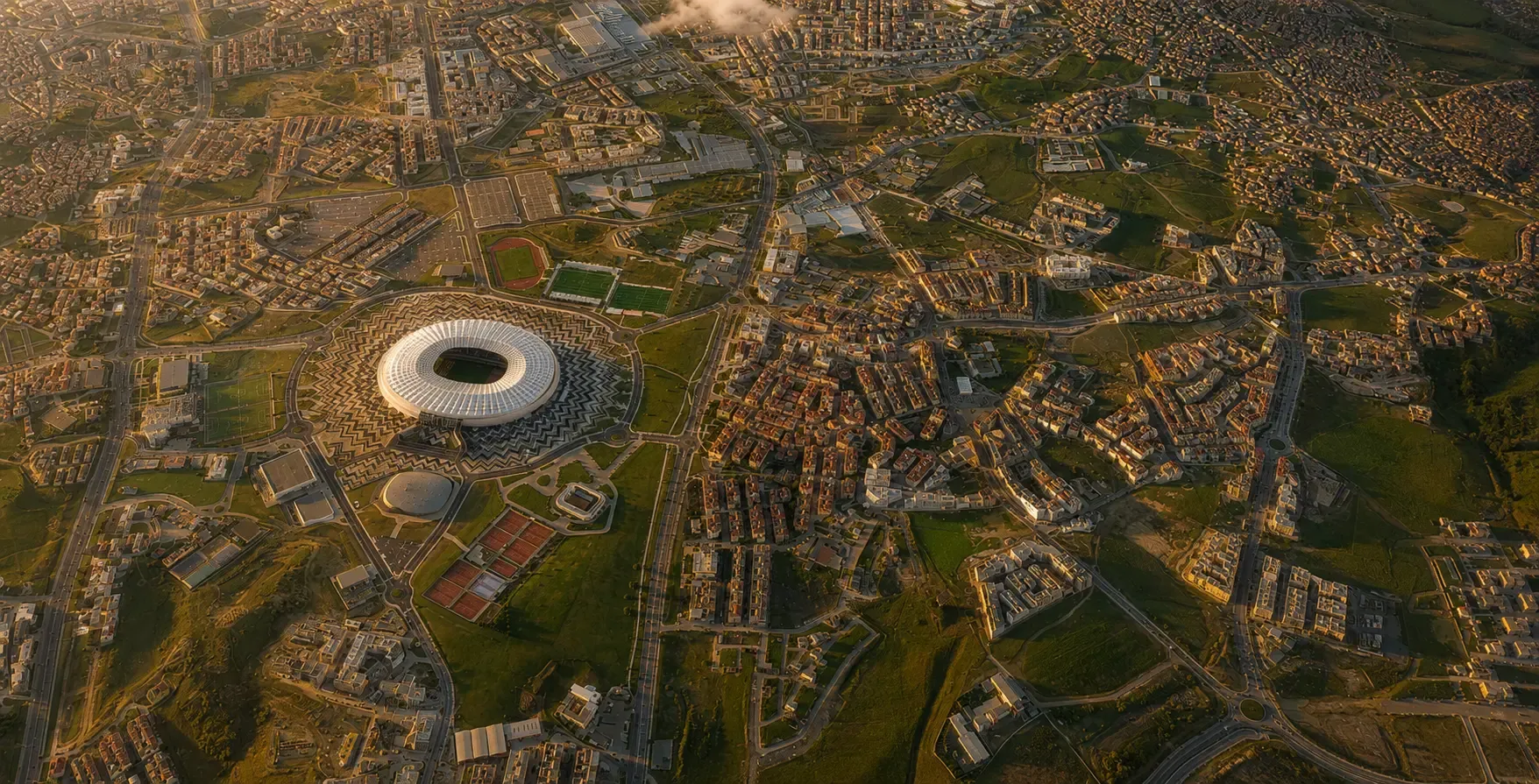
Route de Rabat is one of Tangier's most promising investment corridors, offering residential property at prices well below the city's waterfront districts while sitting on the main southern approach connecting the urban core to the outskirts and emerging residential expansion. A modest two-bedroom apartment can be purchased for under 1.5 million MAD (approximately €135,000–€150,000), creating an accessible entry point for international investors and diaspora buyers building property portfolios. Properties in this corridor generate approximately 4–5% annual rental income on purchase price, a solid yield for investors seeking steady returns rather than market-peak appreciation. Comparable square footage in Malabata commands 20–30% premium pricing, making Route de Rabat attractive for value-conscious buyers willing to accept location outside the waterfront prestige zone. Rental rates reflect emerging neighborhood status: one-bedroom apartments lease for 3,500–5,000 MAD monthly; two-bedroom units rent for 5,000–7,500 MAD monthly. Notary fees and closing costs range 6–8% of purchase price including registration and legal fees, consistent with Moroccan market standards. Property acquisition typically completes in 4–8 weeks, faster than waterfront prestige areas where verification procedures extend timelines. The investment thesis centers on appreciation potential: infrastructure improvements (schools, shopping, transportation) and demographic shift toward peripheral expansion suggest 6–10% annual appreciation potential from a lower price base over 5–10 year horizons.
Route de Rabat: Tangier’s Emerging Residential Investment Corridor
Route de Rabat occupies a strategic position in Tangier’s real estate landscape that few investors have fully grasped. Located along the city’s southern approach, this residential corridor bridges the gap between Tangier’s bustling urban core and the quieter outskirts—a location that has quietly become one of the city’s most undervalued investment opportunities. What makes Route de Rabat particularly compelling is not flashy waterfront views or heritage charm, but rather steady, predictable growth driven by genuine residential demand and improving infrastructure connectivity.
Unlike Tangier’s more established prestige districts, Route de Rabat hasn’t yet absorbed the price premiums that define neighborhoods like Malabata or Iberia. Yet the fundamentals underlying this corridor suggest that window may not remain open indefinitely. Understanding Route de Rabat today—before the investment thesis becomes obvious to the broader market—is exactly the kind of foresight that separates successful investors from those who chase completed booms.
What Makes Route de Rabat a Strategic Investment Location
Route de Rabat’s appeal rests on three interconnected factors: location, accessibility, and emerging demand. The corridor runs along Tangier’s primary southern artery, the road connecting the city center to Rabat. This is not a quiet backstreet; it’s an arterial route that experiences consistent traffic and commercial activity. That consistency translates into reliable foot traffic, established services, and—crucially—developer interest.
The neighborhood benefits from proximity to essential services without the congestion of downtown. Supermarkets, banks, cafés, and clinics line the avenue, making everyday life straightforward for residents. For investors evaluating rental potential, this accessibility matters tremendously: tenants actively seek out areas where they can handle daily tasks without lengthy commutes or car dependency.
Unlike some of Tangier’s more exclusive neighborhoods, Route de Rabat serves a broad demographic. Young professionals, families, and retirees all find the corridor livable. This demographic diversity is an often-overlooked strength for rental investments—it reduces vacancy risk by expanding your potential tenant pool.
The Investment Case: Why Route de Rabat Matters Now
Tangier’s real estate market has experienced uneven development over the past decade. Waterfront districts like Malabata and Marina Bay captured substantial investor attention and capital. Central areas like Iberia and Quartier Administratif saw prices climb accordingly. Meanwhile, Route de Rabat accumulated solid residential stock, improving infrastructure, and growing population without the speculative price inflation that characterizes trophy neighborhoods.
This creates a classic investment opportunity: a neighborhood with fundamentals in place—residents, amenities, connectivity—but not yet fully priced for its long-term potential. Investors who bought in Route de Rabat two or three years ago are beginning to see meaningful appreciation. Those buying today have the chance to capture that same trajectory before broader market recognition drives prices to parity with nearby established areas.
The rental market in Route de Rabat reflects this opportunity. One-bedroom apartments on the avenue consistently lease to young professionals and service workers at competitive monthly rates. Two-bedroom units attract small families. The turnover is steady, the tenant quality is generally solid, and price escalation year-on-year remains modest but consistent.
Key Investment Segments in Route de Rabat
Route de Rabat itself isn’t monolithic. The corridor divides into distinct segments, each with slightly different characteristics and investment profiles:
- Avenue-facing units: These capture the bustle and foot traffic of the main commercial boulevard. Ground-floor retail space and first-floor apartments benefit from high visibility. Rental appeal is strong, particularly for service businesses and student accommodations, though noise levels are higher.
- Side-street residential: One block removed from the main avenue, quieter streets branch off with apartment blocks and smaller residential developments. These neighborhoods retain Route de Rabat’s accessibility while offering noticeably calmer living conditions—a sweet spot for family rentals and owner-occupants.
- Mixed-use developments: Several newer projects combine ground-floor commercial space with residential apartments above. These attract both owner-operators and pure investment buyers seeking diversified income streams.
- Off-plan opportunity: New development activity is accelerating in Route de Rabat. Buying off-plan in this corridor offers the lowest entry price for modern finishes and contemporary unit layouts, though it requires patience for handover and carries standard off-plan risks.
Comparative Advantages Versus Other Tangier Neighborhoods
Route de Rabat’s position becomes clearer when compared directly to alternative neighborhoods. Malabata’s coastal charm and beach access command premium pricing—often 20-30% above Route de Rabat for comparable square footage. Yet Malabata attracts a narrower demographic: affluent expatriates and wealthy Moroccan families seeking leisure proximity. Ghandouri has emerged as Tangier’s luxury corridor, but its trajectory has been toward penthouses and high-end apartments; modest family housing is becoming scarce as the neighborhood upgrades.
Route de Rabat operates in different terrain entirely. It’s a solidly middle-to-upper-middle segment that captures broad residential demand without attempting to compete for luxury positioning. For buy-to-let investors seeking steady yields over dramatic appreciation, this positioning is actually advantageous. You’re not betting on a narrow wealthy demographic; you’re betting on consistent demand from Tangier’s largest population segment.
Entry pricing in Route de Rabat remains accessible. A modest two-bedroom apartment can be purchased for under 1.5 million MAD—roughly 135,000–150,000 EUR. This entry price, combined with rental yields in the 4-5% range, creates favorable financing dynamics for investors using mortgage leverage.
Development Activity and Future Catalyst Events
Tangier’s broader infrastructure investments are creating tailwinds for Route de Rabat specifically. The southern approach corridor has seen incremental improvements to roadway conditions, lighting, and utilities. While these upgrades may seem routine, they signal municipal commitment to the area and tend to precede property appreciation cycles.
Developer interest in Route de Rabat is increasing noticeably. Major developers who previously focused exclusively on prestige corridors are now launching projects in this area. This shift indicates that savvy capital sees Route de Rabat as offering better risk-adjusted returns than higher-priced alternatives. When major developers begin repositioning capital, market participants should take notice.
Several established Tangier developers have recently announced projects in the Route de Rabat corridor. While specific details remain preliminary, the velocity of development interest suggests this is no longer a backwater neighborhood—it’s becoming part of Tangier’s mainstream residential development landscape.
Financing and Purchase Logistics for Route de Rabat
For foreign investors, purchasing in Route de Rabat follows Morocco’s standard property acquisition framework. The pathway is straightforward: identify a property, conduct due diligence on title and ownership, agree terms with the seller, and complete notary registration. Notary fees and closing costs in Route de Rabat are equivalent to those in other Tangier neighborhoods—typically 6-8% of purchase price including registration and legal fees.
Financing availability for Route de Rabat purchases is reasonable. Some Moroccan banks will lend against properties in this corridor, particularly for investors with existing business operations in Morocco or demonstrable income sources in the country. Foreign buyers without local income typically require cash purchase or external financing arrangements. Consulting with Immoworld’s advisory team can help clarify your specific financing options based on your circumstances.
The purchase timeline in Route de Rabat is typically 4-8 weeks, depending on title clarity and your financing complexity. This is actually faster than waterfront prestige areas, which often involve additional due diligence complexity.
Rental Market Dynamics and Income Potential
Route de Rabat’s rental market is characterized by steady, unglamorous demand. You won’t lease to wealthy expats seeking beachfront villas, but you will consistently attract working professionals, young families, and students. Monthly rental rates vary by unit size and finish level:
- Studio apartments: 2,500–3,500 MAD monthly
- One-bedroom: 3,500–5,000 MAD monthly
- Two-bedroom: 5,000–7,500 MAD monthly
- Three-bedroom: 7,500–10,000 MAD monthly
These yields translate to approximately 4-5% annual rental income on purchase price—respectable returns in Tangier’s market. Vacancy periods are typically brief (2-4 weeks between tenants), and tenant retention is solid in this demographic segment. Unlike prestige neighborhoods where seasonal vacancy can be acute, Route de Rabat experiences year-round demand.
Risk Factors and Honest Assessment
Route de Rabat is not without risks. The corridor’s reliance on an arterial roadway means traffic noise is inherent to the location—particularly for avenue-facing units. This noise sensitivity affects both personal enjoyment and rental appeal for tenants seeking tranquility. Second, the corridor lacks the distinctive character that attracts tourism-minded short-term rental investors; long-term residential rental is the realistic model here.
Infrastructure capacity is another consideration. As Route de Rabat densifies, water pressure, electrical capacity, and sewage systems will face increasing demand. While no immediate crises appear imminent, long-term investors should monitor municipal infrastructure investment announcements. Finally, Route de Rabat will eventually see price normalization—the gap between this corridor and nearby established neighborhoods won’t remain indefinitely. This is actually a feature, not a flaw, for early investors, but later entrants should expect diminishing appreciation premiums.
The Path Forward: When to Invest in Route de Rabat
Route de Rabat represents a window of opportunity that won’t remain open indefinitely. The neighborhood possesses all the fundamentals of a maturing residential corridor: established population, reliable services, steady rental demand, and growing developer activity. It lacks only the price premium that broader market recognition would bring.
Investors with a 5-10 year holding horizon, comfort with moderate leverage, and interest in steady rental income rather than speculative appreciation should examine Route de Rabat seriously. Timing matters less than position; early investors in established neighborhoods captured steady returns regardless of entry timing, so long as fundamentals remained solid. Route de Rabat’s fundamentals appear genuinely solid.
Begin by reviewing current property listings in the Route de Rabat corridor. Compare pricing, unit sizes, and amenity packages across different segments of the avenue and the quieter side streets. Walk the neighborhood in person if possible—traffic noise, street condition, and service density become immediately obvious in person, in ways no listing photograph can capture.
Conclusion: Route de Rabat as Strategic Positioning
Route de Rabat’s emergence as a serious investment corridor reflects Tangier’s continued maturation as a real estate market. The days when only waterfront prestige neighborhoods and historic medina conversions attracted investor attention are fading. Today’s sophisticated Tangier investors recognize that reliable middle-segment neighborhoods—those with residential appeal to broad demographics, steady rental demand, and accessible entry pricing—often deliver superior risk-adjusted returns compared to trophy addresses.
If you’re evaluating Route de Rabat property, approach it with clear-eyed realism about what this corridor offers: not beachfront glamour or historic charm, but steady residential demand, emerging infrastructure, and realistic appreciation potential. For investors comfortable with that value proposition, the timing to act is now—before the broader market discovers what discerning investors already recognize.
Ready to explore Route de Rabat investment opportunities? Connect with Immoworld’s advisory team to discuss specific properties, financing options, and acquisition strategy tailored to your investment goals.