
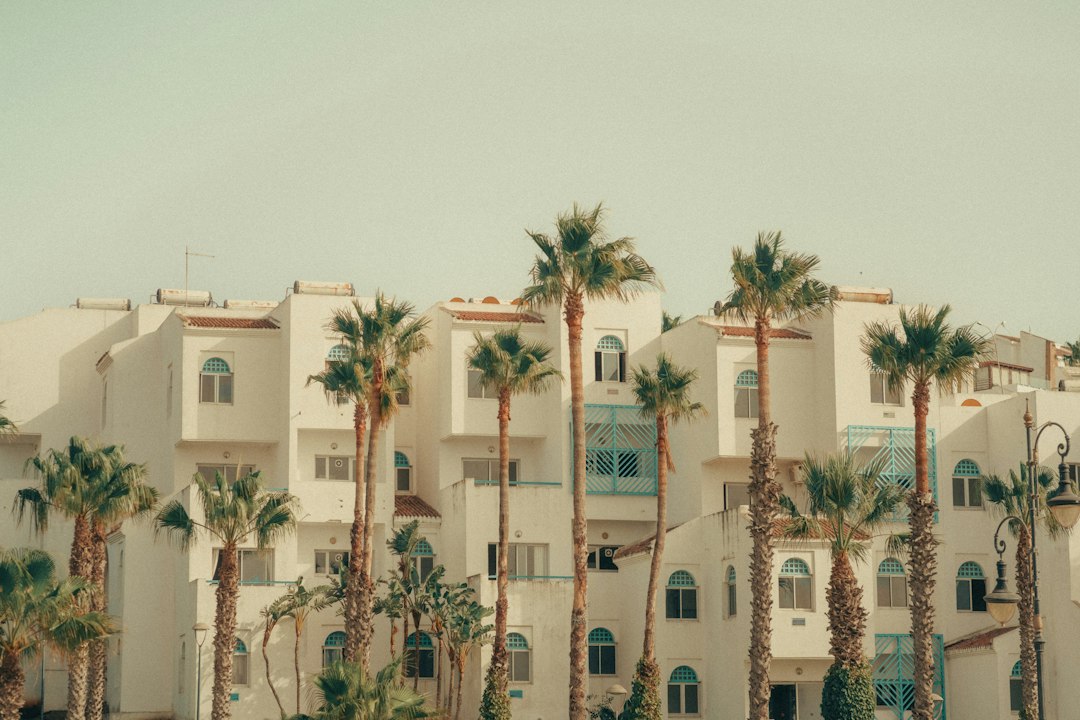
Route de Rabat apartments experienced meaningful price appreciation in 2026, climbing 6–12% as infrastructure investment, diaspora buyer interest, and the corridor's positioning as Tangier's most accessible, family-oriented neighborhood fueled demand. This southern residential corridor has quietly transformed from overlooked to undervalued, attracting serious buyers seeking modern apartments, excellent connectivity, and value that established downtown districts can no longer deliver at the same price point.
What Drove Route de Rabat's 2026 Price Appreciation
Route de Rabat's 6–12% price climb in 2026 reflects convergence of three powerful market forces that fundamentally reshaped buyer perception of this residential corridor. First, improved transport infrastructure—expanded bus service, better road conditions, and anticipated TGV rail connectivity—made Route de Rabat genuinely convenient rather than peripheral. Second, diaspora buyers and international investors recognized the corridor's value relative to saturated downtown neighborhoods. Third, new residential projects from established developers added modern inventory at price points that remain below comparable units in Ghandouri or Malabata Hills.
The corridor benefits from being neither downtown-dense nor peripheral—it occupies what developers call the "sweet spot" for families and younger investors who want city access without downtown congestion. Everyday amenities—supermarkets, clinics, schools—line the avenue, eliminating the need for constant downtown commutes. This practical appeal, combined with post-2025 developer confidence, translated directly into higher asking prices and faster transaction speeds.
Market Performance by Unit Type
Price appreciation across Route de Rabat's inventory segments showed distinct patterns, revealing where buyer demand concentrated most intensely:
- Studios and 1-bedroom apartments: Rose 8–13%, driven by investor appetite for short-term rental potential and first-time buyer demand. Small-format units priced between 75,000€ and 110,000€ saw the fastest sell-through times.
- 2-bedroom apartments: Climbed 6–10%, reflecting steady family-buyer interest. Mid-range units (130,000€–180,000€) remained the corridor's largest segment by transaction volume.
- 3-bedroom and larger units: Appreciated 5–8%, as these typically remain above Route de Rabat's core buyer budget. Most larger families gravitate toward Ghandouri or Malabata Hills instead.
- Off-plan units: Outpaced resale apartments by 2–4 percentage points, reflecting developer pricing power and buyer preference for modern finishes and payment flexibility.
Neighborhood Factors Reshaping the Corridor
Route de Rabat's emergence as Tangier's most accessible mid-market corridor reflects specific, measurable improvements in the neighborhood's infrastructure and commercial ecosystem. The expansion of retail services—a new Carrefour extension opened in late 2025, and several secondary schools renovated their facilities—reduced the perception that Route de Rabat was "too far" from essential services. Buses now run more frequently to downtown and to the airport, making commute times genuinely competitive with central Tangier.
The corridor has also benefited from reduced developer competition from other quarters. Ghandouri's rapid appreciation priced out many first-time and mid-market buyers, pushing demand toward Route de Rabat as the next logical neighborhood for value-conscious purchasers. This shift is structural, not cyclical—buyers are making deliberate, rational choices to accept a slightly longer commute in exchange for 15–25% lower prices and newer finishes.
Route de Rabat's dedicated neighborhood guide maps the specific pocket locations where price appreciation concentrated most intensely in 2026, helping buyers distinguish between truly improving microlocations and pockets that remain less transformed.
Comparative Performance: Route de Rabat vs. Competing Neighborhoods
Understanding Route de Rabat's 2026 gains requires comparing its performance to peer neighborhoods that target similar buyer profiles. Several established corridors experienced notably slower appreciation, revealing the corridor's emerging competitive edge:
- Centre-Ville: Appreciated 4–7%, as ongoing tourism infrastructure investment benefited specific microlocations but offered limited appeal to family buyers seeking parking, green space, and calm.
- Moulay Youssef: Rose 5–8%, held back by aging stock and lower developer activity, despite its central location and strong everyday services.
- Boulevard Mohamed VI: Climbed 9–15%, outpacing Route de Rabat, but waterfront positioning and higher starting prices position it for a distinctly wealthier buyer profile.
- Ghandouri: Surged 10–16%, but entry prices (200,000€+) exclude most first-time and mid-market buyers that Route de Rabat now attracts.
Route de Rabat's 6–12% appreciation sits comfortably in the middle, reflecting neither the saturation of central districts nor the premium valuations of beachfront or luxury neighborhoods. This positioning—accessible, improving, but not yet fully discovered—explains why diaspora buyers increasingly view the corridor as Tangier's last true value opportunity.
Developer Activity and New Inventory
New residential projects fundamentally reshaped Route de Rabat's 2026 pricing trajectory. Several mid-sized developers launched or expanded projects in the corridor, recognizing that post-2025 buyer demand had shifted decisively away from downtown premium units toward mid-market family apartments. These projects—typically ranging from 50 to 150 units per development—offered modern amenities (parking, fitness centers, security), structured payment plans, and completion timelines of 24–30 months.
The presence of multiple partner developers in Route de Rabat created healthy price competition, actually strengthening buyer negotiating power on resale units while establishing new market-clearing prices for off-plan apartments. Unlike Ghandouri or Malabata Hills, where a handful of premium developers dominate, Route de Rabat's smaller developers kept pricing grounded in actual buyer purchasing power rather than speculative appreciation.
Diaspora Buyer Interest and International Investment
Route de Rabat's strongest 2026 tailwind came from diaspora buyers and international investors seeking practical, modern apartments at prices that no longer existed in Tangier's traditionally popular neighborhoods. This buyer segment—typically Moroccan expatriates planning retirement or investment, and European empty-nesters seeking Mediterranean lifestyle—found Route de Rabat's combination of modern amenities, everyday convenience, and 6–12% annual appreciation far more compelling than oversaturated downtown districts where prices had already tripled.
Diaspora buyers specifically valued Route de Rabat's schools, security, and straightforward transport access—pragmatic concerns that matter far more to families than beachfront or old-town charm. This fundamental shift in buyer preference, accelerated by 2026's infrastructure improvements, positioned Route de Rabat as Tangier's most family-friendly mid-market corridor for the first time.
Closing Costs and Investment Timeline
For foreign buyers evaluating Route de Rabat apartments, understanding the complete cost structure remains essential to realistic investment planning. Use Immoworld's notary fees calculator to estimate your exact closing costs—typically 7–10% of purchase price including notary registration, transfer taxes, and Morocco's residency documentation requirements. Route de Rabat's lower entry prices mean your total cash outlay for a 110,000€ apartment remains manageable at roughly 17,600€ in closing costs.
Investment timeline also matters. Off-plan apartments typically deliver within 24–30 months, allowing your unit to appreciate within Route de Rabat's proven growth trajectory. Resale apartments offer immediate occupancy but require negotiation and due diligence. Either path, executed in 2026, positioned buyers to benefit from the corridor's continued transformation through 2027–2030.
Price Predictions: What Comes Next for Route de Rabat
Route de Rabat's 2026 performance sets up compelling scenarios for 2027 and beyond. Conservative analysis suggests continued appreciation of 5–10% annually as infrastructure projects complete, developer inventory remains absorbed, and diaspora buyer awareness deepens. The corridor has not yet reached the saturation point that currently constrains downtown neighborhoods, meaning entry-level pricing has room to remain competitive while absolute values climb toward mid-market parity with Ghandouri.
The primary risk remains developer execution—if multiple projects fail to deliver on schedule or finishes disappoint, buyer confidence could cool rapidly. The secondary risk is that Route de Rabat's value becomes widely known to international investment funds, potentially driving off-plan pricing beyond practical family-buyer budgets. Neither scenario appeared imminent in 2026, but both warrant monitoring through 2027.
Practical Next Steps for Buyers
If Route de Rabat's value proposition resonates with your investment or lifestyle goals, several concrete steps clarify your options:
- Browse Immoworld's full property listings to compare available apartments, price ranges, and developer options currently active in Route de Rabat.
- Understand the complete legal and financial framework by reviewing common questions about buying property in Tangier as a foreigner—this covers the notary process, financing options, and regulatory requirements specific to foreign buyers.
- Contact Immoworld's advisory team to discuss specific units, negotiate directly with developers, or arrange viewings during your next Tangier visit.
- Calculate your exact closing costs and mortgage pre-approval to clarify your realistic budget ceiling.
- Compare Route de Rabat's opportunity against competing mid-market neighborhoods to confirm the corridor aligns with your lifestyle and investment timeline.
Conclusion: Route de Rabat's Moment Has Arrived
Route de Rabat's 6–12% price appreciation in 2026 marks a genuine inflection point, not hype. This residential corridor transformed from overlooked to undervalued through measurable infrastructure investment, diaspora buyer recognition, and the simple reality that downtown Tangier no longer offers genuine value for families seeking space, modern finishes, and everyday convenience at accessible prices. The corridor's strengths—practical amenities, developer confidence, family-orientation—position it for sustained appreciation through 2030, but current entry prices remain far more rational than established luxury neighborhoods or saturated downtown districts.
If you're evaluating Route de Rabat apartments for 2026 purchase, the window for sub-120,000€ units with modern finishes and development potential remains genuinely open—but likely closing as awareness spreads. Reach out to Immoworld's team to discuss specific opportunities, arrange developer introductions, or begin your due diligence process immediately. Route de Rabat's story is still being written, and early rational buyers are the ones capturing real value.