
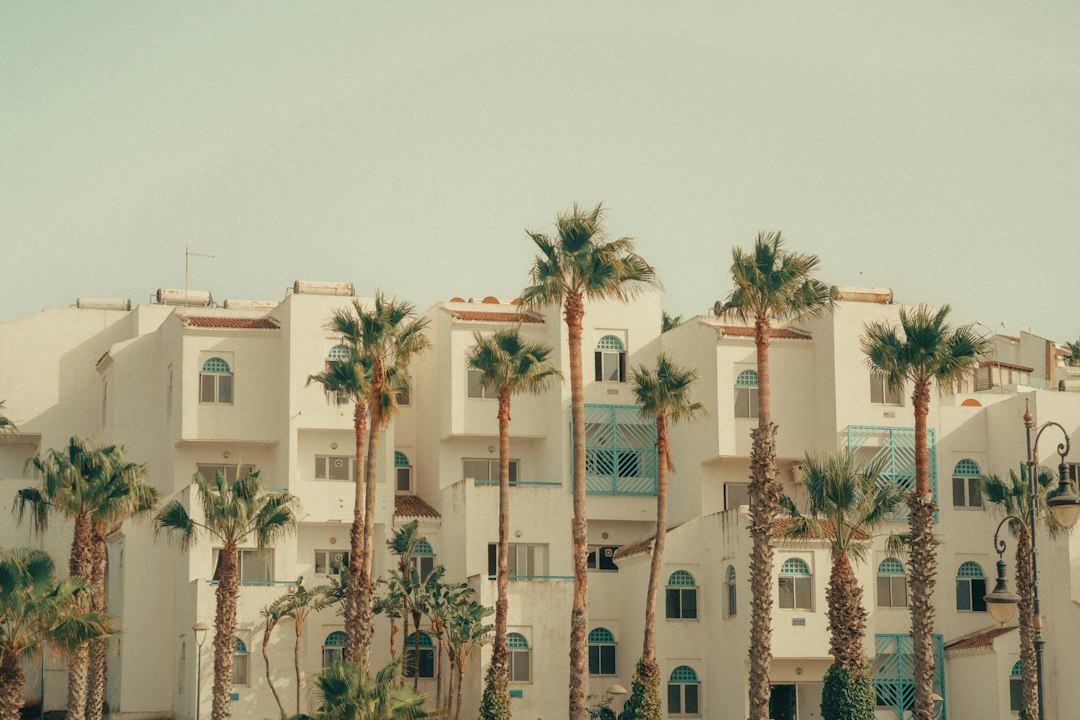
Diaspora buyers—Moroccan expatriates, international investors, and second-home seekers from Europe—have become the primary engine driving Tangier's property market in 2026. Their purchasing power, combined with strong foreign investor interest, is pushing prices upward, accelerating off-plan development, and fundamentally reshaping which neighborhoods command premium valuations. This trend is not temporary: it reflects structural shifts in how Tangier is perceived globally and a genuine revaluation of Mediterranean lifestyle at African prices.
Who Are Diaspora Buyers and Why Tangier?
Diaspora buyers comprise three overlapping groups: wealthy Moroccan expatriates returning from Europe, North America, and the Gulf States; second-home buyers from France, Spain, and Italy seeking Mediterranean coastal living; and international investors seeking rental yields and currency diversification. Together, they account for an estimated 40–50% of Tangier's residential market activity in 2026, a sharp increase from 25–30% in 2022.
Their motivation is straightforward: Tangier offers beach access, modern infrastructure, European connectivity, and Moroccan cultural authenticity at a fraction of European property prices. A €300,000 apartment with sea views in Tangier costs €800,000+ in Barcelona or €1.2 million+ in Cannes. For diaspora investors, this price differential creates compounding value—both as a lifestyle asset and an income stream through rental markets.
Tangier Property Prices 2026: The Diaspora Effect
Price appreciation has accelerated measurably. Premium neighborhoods have seen 12–18% annual growth since 2024, driven almost entirely by non-resident demand. Coastal and waterfront areas—Malabata, Marina Bay, Achakar—are up 15–22% year-over-year. Central districts like Quartier Administratif and Castilla have appreciated 8–12%, while emerging zones like Ghandouri have jumped 20%+ as developers accelerate luxury projects targeting diaspora buyers.
Entry-level prices remain relatively stable, but mid-market and luxury segments have shifted dramatically:
- Studios and compact 1-bedrooms: €95,000–€150,000 (up 5–8% YoY)
- Standard 2–3 bedroom apartments: €180,000–€280,000 (up 10–15% YoY)
- Luxury apartments (4+ beds, sea views): €350,000–€700,000+ (up 15–22% YoY)
- Penthouses and high-end villas: €600,000–€2,000,000+ (up 18–25% YoY)
This stratification reflects diaspora preferences: they prioritize finishes, views, location proximity to beaches and restaurants, and modern amenities over square footage alone. Developers have responded by building denser, vertical projects with smaller unit counts but higher per-sqm pricing.
Tangier Property Trends 2026: Developer Response and Infrastructure
Developers have fundamentally reoriented their projects toward diaspora demand. Major players like Eagle Hills, Aafer Groupe, and Amanah Real Estate are launching high-finish, seafront-oriented projects rather than bulk-market residential blocks. Off-plan sales volume has surged 35–40% in 2026 compared to 2025, with diaspora buyers accounting for roughly 60% of pre-sales activity.
Key infrastructure projects amplify this trend. The TGV high-speed rail connection to Rabat and Casablanca, expected in 2027–2028, has become a focal point for diaspora investment—buyers are locking in properties now ahead of completion, anticipating 25–35% price appreciation at connection. Port modernization at Tanger Med and the city's emerging status as a regional financial and logistics hub create tangible supply-side confidence.
Neighborhoods once considered secondary—Tanja Balia, Jbel Lkbir, Meghogha—are attracting serious diaspora capital for the first time. Their lower entry prices (€150,000–€250,000 for 2–3 bedroom units) combined with rapid transport links and new amenity development offer diaspora investors premium risk-adjusted returns.
Rental Yields and the Investor Incentive
Short-term rental yields remain one of Tangier's strongest selling points for diaspora investors. Studios and 1-bedroom units average 5–7% annual net yields; larger units yield 4–5%. These returns—combined with 10–15% annual price appreciation in premium areas—deliver compounding wealth creation that European real estate cannot match. A diaspora buyer investing €200,000 in a 2-bedroom apartment can realistically expect €10,000–€12,000 annual rental income plus €20,000–€30,000 annual capital appreciation in strong neighborhoods.
This calculation drives disproportionate demand for rental-ready units—modern finishes, furnished options, and buildings with property management or co-ownership structures. Developers have adapted, building more studios and 1-bedroom units with standardized finishes suited to short-term rental platforms.
Geographic Concentration and Neighborhood Hierarchy
Diaspora capital is not evenly distributed. Coastal corridors and well-established central neighborhoods command 70% of diaspora interest:
- Malabata & Malabata Hills: Premium beach access, new construction, diaspora concentration reaching 80% of buyers
- Marina Bay: Leisure-oriented waterfront living, emerging as diaspora second-home capital
- Achakar: Exclusive northwestern villas, established expatriate community, ultra-high-net-worth diaspora buyers
- Quartier Administratif: Central convenience, walkable, mid-market diaspora buyers and young professionals
- Iberia: Family-oriented, upscale, established reputation attracting diaspora with school-age children
- Ghandouri: Emerging luxury corridor, attracting younger diaspora investors seeking appreciation upside
Neighborhoods outside these corridors remain primarily domestic purchases, with slower price growth and limited diaspora interest. This concentration is creating a two-tier market: diaspora-preferred zones appreciating 12–25% annually, and secondary zones growing 3–8% annually.
Currency Advantage and Timing
The euro-to-dirham exchange rate remains favorable for European diaspora buyers, making Tangier purchases approximately 15–20% cheaper in real terms than they were in 2019–2021. This currency tailwind is temporary and widely acknowledged among diaspora investors, creating urgency around purchases in 2026–2027. Interviews with Immoworld's advisory team reveal that currency hedge—locking in euro-denominated prices before potential dirham appreciation—is a primary motivator for diaspora purchase timing.
Regulatory Environment and Investor Confidence
Morocco's foreign property ownership framework remains straightforward: non-residents can purchase residential property without restriction, obtain mortgages at favorable rates (4.5–5.5%), and benefit from stable legal protections. The VEFA (Vente en l'État Futur d'Achèvement) framework protects off-plan buyers, and notary procedures—while bureaucratic—are transparent and predictable. These factors have made Tangier an attractive entry point for diaspora investors comparing Morocco to Turkey, Portugal, or Thailand.
Government initiatives supporting international investment, including tax incentives for remote workers and residency programs for high-net-worth investors, have further accelerated diaspora capital inflows. Foreign investment in Tangier real estate has reached unprecedented levels in 2026, reshaping the city's identity from a domestic market to a globally recognized Mediterranean destination.
What This Means for Property Buyers and Investors
For owner-occupiers, diaspora demand has narrowed affordable inventory in prime locations. A €150,000–€200,000 budget once secured a solid apartment in Castilla or central Quartier Administratif; today, those neighborhoods are increasingly competitive, with diaspora investors outbidding owner-occupiers. Buyers should explore emerging neighborhoods like Ghandouri or Jbel Lkbir, where pricing remains accessible but appreciation momentum is accelerating.
For investors, the diaspora trend creates dual-track opportunities: speculative appreciation plays in emerging diaspora neighborhoods (Ghandouri, Meghogha, Route Rahrah), or yield-focused purchases in established coastal zones where strong rental demand has stabilized returns. Immoworld's full property listings are organized by neighborhood and price point, allowing buyers to compare appreciation trajectories with rental yield data.
For developers, diaspora demand justifies higher construction quality and amenity investment. Newer projects from established partners like Eagle Hills and Aafer Groupe reflect this shift: high-finish materials, rooftop facilities, and modern design command 15–25% premiums over 2023–2024 projects, reflecting diaspora willingness to pay for quality.
Future Outlook: Sustainability and Risk
The question facing the market is whether diaspora demand can sustain 12–18% annual price growth. Several factors suggest moderation ahead:
- Entry prices for prime locations are approaching €400,000–€600,000, limiting diaspora buyer pools to higher-net-worth segments
- Rental yield compression is occurring in over-saturated neighborhoods like Marina Bay, threatening investor returns
- European economic uncertainty could reduce diaspora discretionary spending on second homes or investment
- Supply growth is accelerating, with 15–20% annual inventory increases expected through 2027–2028, which may moderate price appreciation once TGV infrastructure matures
That said, structural factors remain supportive: diaspora investor capital shows no sign of diminishing, infrastructure development justifies higher valuations, and Tangier's Mediterranean positioning makes it strategically attractive for international investors even if short-term appreciation moderates.
Conclusion: Diaspora Capital Has Permanently Reshaped Tangier's Market
Diaspora buyers are not a passing phenomenon—they represent a fundamental revaluation of Tangier as a Mediterranean destination on par with Lisbon, Barcelona's secondary markets, or coastal Turkey. Their capital has created a global property market inside Morocco, introducing European pricing discipline while maintaining African affordability. This creates genuine opportunity for owner-occupiers and investors who understand neighborhood hierarchies and can access the right developer inventory.
If you're a diaspora buyer or international investor exploring Tangier property in 2026, timing and location are critical. Premium coastal neighborhoods are entering mature appreciation phases; emerging central and hillside zones offer better risk-adjusted returns. Immoworld's FAQ section answers common questions about the foreign purchase process, and our advisory team can connect you with vetted developers and off-plan opportunities matched to your budget and investment thesis. Reach out to discuss your specific goals and market positioning.